Contactless Car Wash: How Modern Machines Clean Without Scratching Your Paint
For many drivers, washing the car involves a quiet worry: will the wash itself damage the paint it is meant to protect? Traditional automatic washes drag brushes or cloth strips across the bodywork, and if those brushes hold grit from the vehicle washed before you, fine scratches and swirl marks can follow. The contactless car wash was designed to remove that risk entirely. Nothing solid touches your car at all — the cleaning is done by water pressure, carefully formulated detergents and precise timing. Here is how the technology works, and when it is the right choice for your vehicle.
Cleaning Without Contact: The Basic Idea
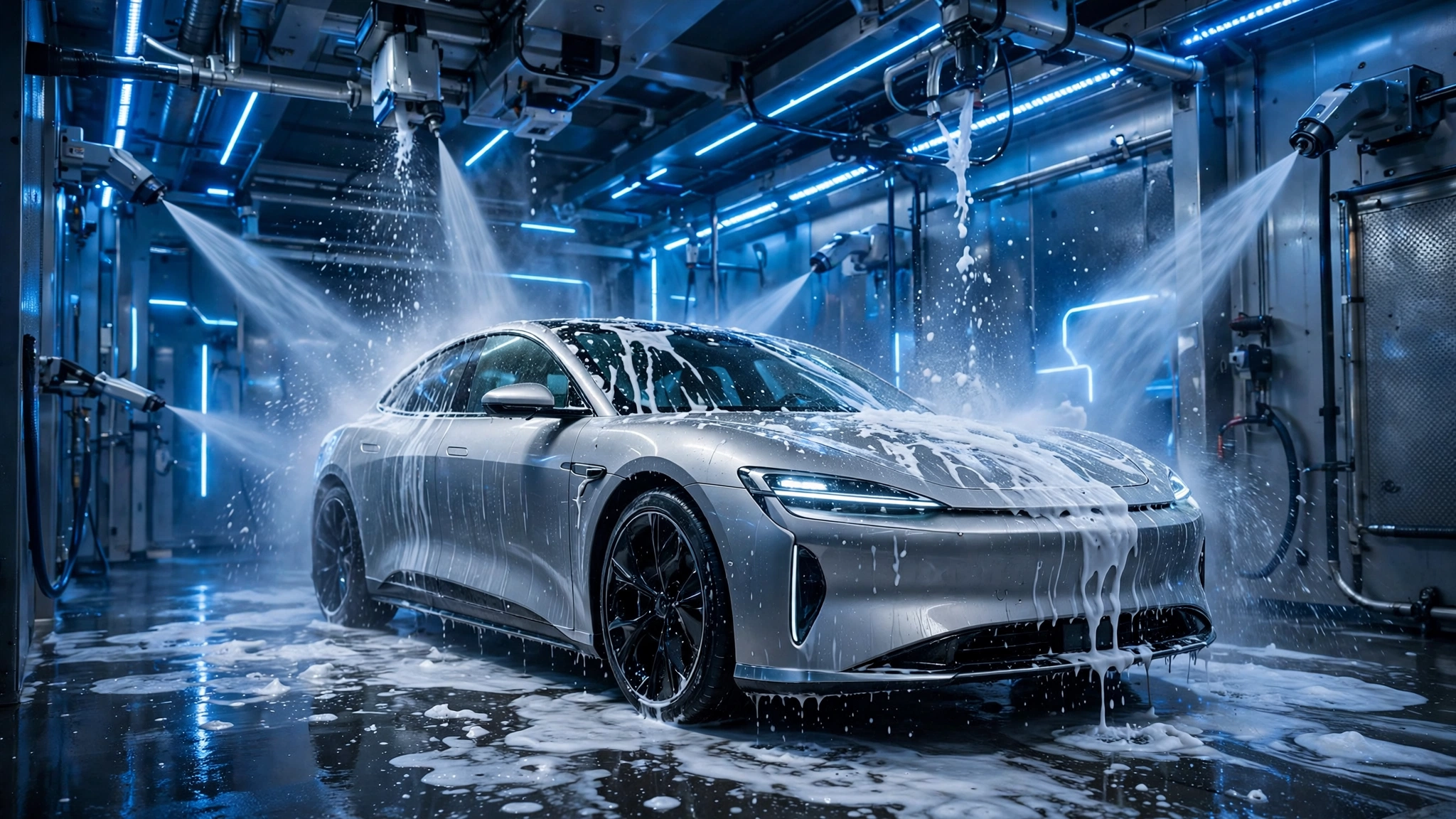
In a contactless wash, the car stays still or moves slowly through an arch fitted with sensors and nozzles, while everything that cleans it is liquid or air. Because no brush, sponge or cloth ever rubs the surface, there is no friction to drag particles across the paint. Modern automated car wash machines coordinate each stage automatically, measuring the vehicle’s size and shape so water and chemicals are applied evenly, from the roof rails down to the wheel arches. The result is a wash that treats a freshly detailed car and a family hatchback with the same gentle consistency.
Step One: Pre-Soak and Smart Detergents
The process begins with a pre-soak: a low-pressure spray of alkaline detergent that loosens road film, insects, salt and oily grime. Chemistry does the heavy lifting in a contactless wash, so these detergents are engineered to break the bond between dirt and paint during a short dwell time, usually under a minute. Some systems apply a second, mildly acidic stage that neutralises the first and targets mineral deposits and brake dust. This two-step chemical approach is what allows the wash to clean effectively without any scrubbing action at all.
Step Two: High-Pressure Rinsing
Once the detergents have softened the dirt, banks of high-pressure nozzles blast it away. The jets are angled to sweep grime downwards and off the panels, and oscillating or rotating nozzles help reach mirrors, spoilers, number plates and the backs of wheels. Underbody jets wash away the salt and mud that collect beneath the car, an area hand washing often misses and where corrosion tends to start. Water pressure is calibrated carefully: strong enough to strip loosened dirt, but controlled so it does not force water past seals or damage loose trim.
Step Three: Wax, Rinse and Spot-Free Drying
Many contactless programmes finish with a spray wax or sealant that adds short-term shine and helps water bead off the paint, followed by a final rinse using purified, demineralised water. Because this water contains no minerals, it dries without leaving spots or streaks. Powerful blowers then sheet the remaining water off the bodywork, again without touching it. The car emerges clean and dry, with no towel marks — a detail that owners of dark-coloured cars, where every swirl shows, particularly appreciate.
Benefits and Honest Limitations
The headline benefit is paint protection: with no contact, there is virtually no risk of wash-induced scratches, which makes contactless washing ideal for new cars, ceramic-coated vehicles and anyone who cares about keeping a flawless finish. It is also fast, consistent and available around the clock at many sites. The honest limitation is heavy, baked-on dirt. Thick mud, tar spots or weeks of winter grime bonded to the paint may not fully release without some agitation, so a very dirty car might need a pre-rinse by hand or a follow-up wash. Contactless cleaning works best as regular maintenance rather than a rescue treatment.
Choosing the Right Wash for Your Car
If your car is washed every week or two and carries normal road dirt, a contactless wash will keep it looking sharp with the least possible risk to the paintwork. If it has just returned from a muddy trip or carries stubborn deposits, treat the contactless cycle as the main wash and inspect the results, repeating the cycle or spot-cleaning by hand where needed. Whichever you choose, regular washing matters more than the method: dirt, salt and bird droppings damage paint over time, and removing them promptly is the real secret to a lasting shine.
Conclusion
Contactless car washing replaces brushes with chemistry, pressure and precision. Detergents loosen the dirt, high-pressure water removes it, and purified rinses plus air drying finish the job — all without anything solid touching your car. It may not conquer extreme mud in a single pass, but as a safe, quick and consistent way to maintain a clean car and protect its paint, it is easy to see why modern machines have made it the default choice for so many drivers.