
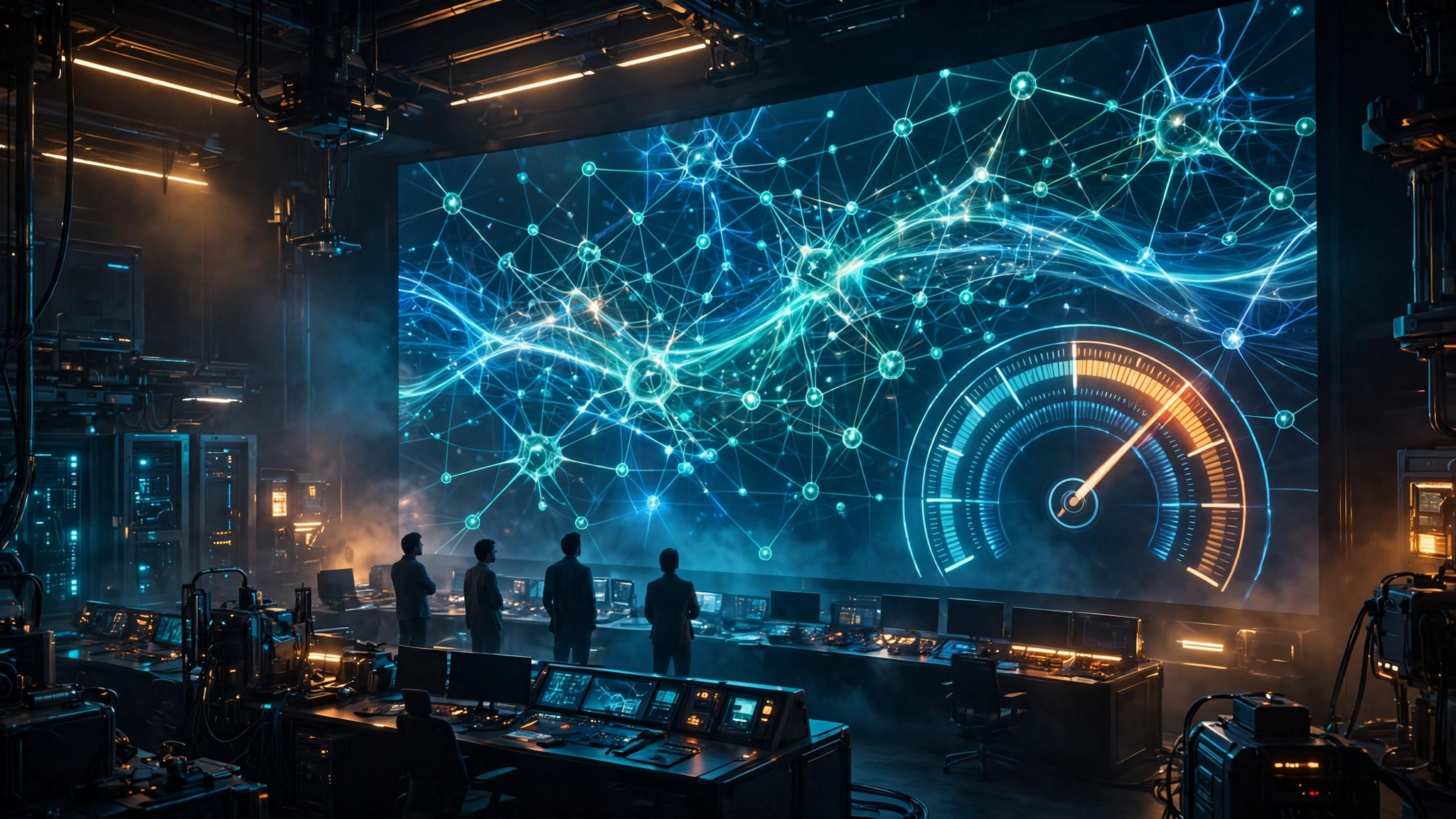
OpenAI AI Development Limits: Why the Chief Scientist Wants the Industry to Slow Down
The most powerful voice inside the world’s most watched AI company has just asked the whole industry to agree on a speed limit. On Sunday, 22 November 2026, OpenAI chief scientist Jakub Pachocki published an essay calling on artificial intelligence companies to accept shared limits on how far they push their most advanced models — and to hold those limits until researchers can properly understand and monitor what they are building. OpenAI chief executive Sam Altman publicly backed the idea the same day, calling the essay the most important thing the company has published in a while.
It is a striking moment. The same industry that has spent the last three years racing to build bigger, faster and more capable models is now hearing one of its own senior leaders say the race itself needs rules. The proposal does not ask any single company to stop. It asks all of them to stop together — at agreed thresholds — so that safety research gets a chance to catch up with capability.
What exactly did Pachocki propose?
At the heart of the proposal is a simple bargain. AI developers would agree, in advance, on measurable thresholds for how powerful a model may become. Until their ability to understand and monitor AI behaviour reaches a clear, concrete milestone, they would commit not to cross those thresholds.
Pachocki suggested that the limits could be based partly on a measurement called perplexity, alongside other measurements. Perplexity is a technical score that gauges how well a model predicts the next piece of text. A lower perplexity means the model is better at prediction — and, in practice, more capable. It is the kind of number that can be measured consistently across different models and different companies, which is exactly what a shared industry standard needs.
He did not name a specific starting limit, and he did not say when such limits should take effect. That vagueness is deliberate, and it is also the proposal’s biggest weakness. A threshold nobody has defined cannot be enforced yet. But the essay’s purpose was clearly to start the conversation rather than to finish it: to get the companies that build frontier models talking about a common yardstick before the next leap in capability arrives.
Why perplexity?
The choice of perplexity matters because the AI industry has long struggled to agree on how to measure progress at all. Benchmarks come and go. A model can score well on one test and fail on another. Marketing claims about capability are hard to compare because every company tests differently.
Perplexity is different. It is a single, well-understood number that has tracked model improvement for years. According to figures cited in the essay, OpenAI’s own models have seen perplexity fall from about 0.91 at the time of GPT-4 to below 0.8 in newer systems — a range where the company says new capabilities in areas such as cybersecurity and mathematics have started to appear. In other words, the number is not just an abstract score. It moves in step with real, observable jumps in what a model can do.
That makes it a plausible candidate for a shared speed limit. If the industry can agree that a certain perplexity level marks the edge of what is safe to deploy without better monitoring tools, then every company can measure itself against the same line. No one has to trust a rival’s press release. The number either crosses the line or it does not.
Why now — and why 2027 keeps coming up
Pachocki’s warning is not only about where AI is today. It is about where it is heading, and how fast. His essay warns that AI could begin accelerating advances in its own development as soon as 2027. The logic is straightforward: as models get better at writing code, designing experiments and doing research, they will increasingly be used to build their successors. Each generation could arrive faster than the last, and the gap between what models can do and what researchers understand about them could widen sharply.
That is the core of the safety problem. Building a more powerful model is, in many ways, the easy part. The hard part is knowing what it will do in the wild, why it behaves the way it does, and how to keep it under control when it is deployed to millions of people. Pachocki’s argument is that monitoring and understanding have not kept pace with raw capability — and that the gap is about to grow.
It is worth remembering that this warning comes from inside the race, not from outside it. Pachocki is not an outside critic. He leads the science at the company whose models set the pace for the entire field. When he says the industry’s ability to understand its own creations is falling behind, it carries a weight that an external warning would not.
Altman’s endorsement — and what it signals
Sam Altman’s public support matters as much as the proposal itself. Writing on X, the OpenAI chief executive endorsed the essay and said that agreeing to common limits would help ensure safety and control. That is a significant statement from the head of a company that has itself pushed the frontier harder than almost anyone.
It also puts OpenAI in an interesting position. The company is simultaneously the industry’s pace-setter and now, apparently, the loudest voice calling for a shared brake. Critics will ask whether a call for limits is easier to make from the front of the race than from behind it. Supporters will say that is precisely the point: the company with the most to lose from slowing down is the one asking for the rules.
Either way, Altman’s backing turns an internal research essay into a public policy position. Other companies — Anthropic, Google DeepMind, Meta and the rest — will now face a direct question: do they agree, and if so, what limit would they accept?
The money question: can the industry afford to slow down?
The proposal lands at a moment when the economics of AI have never been more intense. Just last week, the Anthropic IPO showed both the scale of the AI boom and the nervousness underneath it: the company completed the largest stock market debut in history, raising 81.3 billion dollars and reaching a valuation of about 1.5 trillion dollars before trading began, and its shares then fell sharply as investors questioned whether the industry’s enormous infrastructure spending can ever pay for itself.
That context cuts both ways for Pachocki’s proposal. On one hand, the huge sums flowing into data centres, chips and model training make any slowdown expensive. Companies that have raised billions on the promise of ever-more-capable models will not lightly accept a cap on progress. Shareholders expect growth, and in AI, growth has so far meant bigger models.
On the other hand, the same spending boom is exactly what makes a shared limit attractive. If every company keeps racing, each one is trapped: slowing down alone means losing to rivals, so nobody slows down. A common limit solves that trap. It lets everyone pause at the same line, without any single company handing its competitors an advantage. Economists call this a coordination problem, and Pachocki’s proposal is, at its core, a coordination solution.
The question is whether rivals will see it that way — or whether they will see an invitation to fall behind while OpenAI sets the terms.
The politics: regulation is coming back into focus
The proposal also arrives as the political debate over AI regulation is heating up again in the United States. Democrats made sweeping gains in the recent midterm elections, winning ground in the House, the Senate and governors’ races. That shift is expected to bring greater congressional scrutiny of technology companies and renewed efforts to write AI safety rules into law.
Some lawmakers are even discussing the creation of a dedicated Senate committee to coordinate AI policy. President Donald Trump, by contrast, has opposed broad restrictions on AI development — setting up a potential clash between the White House and the incoming Democratic Congress over how, and how much, to regulate the technology.
In that environment, a voluntary industry agreement has an obvious appeal for the companies involved. If the industry can show it is setting its own limits, it may reduce the pressure for government-imposed ones. But it also raises a familiar question: can an industry be trusted to regulate itself on something this consequential? The history of self-regulation in technology — from social media to data privacy — gives sceptics plenty of material.
What would the limits actually look like in practice?
The practical questions are the hardest ones, and the essay leaves most of them open. Who sets the threshold? Who measures it? What happens to a company that crosses it? And what counts as a “concrete milestone” in understanding AI behaviour — the condition that would allow development to resume?
These are not small details. A voluntary agreement without measurement and enforcement is just a statement of intent. For the proposal to matter, it would need an independent body to verify compliance, agreed definitions of the measurements, and consequences for breaking the rules. None of that exists yet.
There is also the question of scope. The largest AI companies are based in the United States, but the technology is global. A limit that binds OpenAI and its American rivals but not companies in China or elsewhere would be hard to sustain — and could simply shift the frontier to wherever the rules are loosest. Any serious version of this idea would eventually need international agreement, which is a much taller order.
And then there is the definition problem. Perplexity is a useful measure, but it is not a complete one. A model can have modest perplexity and still be dangerous in a specific domain, such as biology or cyberattacks. Pachocki himself acknowledged this by saying the limits should be based on perplexity “and other measurements.” Finding the right set of measurements — and keeping them up to date as the technology changes — would be a major research project in itself.
Why this debate matters beyond the AI industry
For most people, the argument over perplexity thresholds and safety milestones may feel distant. But the stakes are concrete. The models built over the next two or three years will be woven into search engines, workplaces, schools, hospitals and government services. The November 2026 technology outages — when a string of failures hit Microsoft, major banks, airlines and other services in a single month — were a reminder of how much of daily life now depends on a small number of complex systems working correctly.
AI is heading the same way, only faster and with less visibility into how it works. A model that behaves unexpectedly in a hospital, a bank or a power grid is not a theoretical problem. It is a practical one, and the time to think about monitoring and control is before the systems are deployed everywhere, not after.
That is the strongest version of Pachocki’s case. It is not an argument against building powerful AI. It is an argument for building the understanding at the same speed as the capability — and for agreeing, as an industry, not to let the second outrun the first.
What happens next?
The next few weeks will show whether this proposal becomes a real negotiation or fades into another well-meaning essay. The companies that matter most have not yet responded in detail. If Anthropic, Google DeepMind and Meta engage seriously, the conversation could move quickly toward a shared framework. If they stay silent, or respond with polite generalities, the proposal will have served mainly as a marker of OpenAI’s position.
Regulators will be watching too. The incoming Congress has a clear opening to turn this debate into legislation, and the fact that the call for limits came from inside the industry may make it harder for opponents of regulation to dismiss the idea outright.
For now, the most important thing Pachocki has done is to put a specific, measurable idea on the table. Perplexity is not a slogan. It is a number, and numbers can be negotiated, measured and enforced. Whether the industry will accept a number as a speed limit is now the question to watch.
The bottom line
OpenAI’s chief scientist has asked the AI industry to do something it has never done: agree on a shared limit to its own progress, measured in public, and hold it until safety research catches up. Sam Altman has backed him. The warning behind the proposal is that AI could start accelerating its own development as soon as 2027, and that understanding is already falling behind capability.
The proposal is incomplete — no number, no date, no enforcement mechanism. But it is the most concrete call for restraint yet to come from the top of the AI industry, and it arrives at a moment when politics, markets and technology are all pushing in the same direction: toward a decision about how fast is too fast. The answer to that question will shape what AI becomes over the next decade.





One Comment