Chimney Maintenance Checklist: 7 Things to Inspect Before Winter
As the evenings draw in, few things feel better than the first fire of the season. Yet a chimney unused for months can hide soot build-up, cracked masonry, blocked flues and worn parts that turn a cosy night into a safety risk. A simple inspection before winter gives you time to fix small issues while they are still cheap, instead of discovering them on the coldest night of the year. Work through the seven checks below, from fireplace to roof, and you will light that first fire with complete peace of mind.
1. Check the Firebox and Hearth
Start where the fire actually burns. Shine a torch into the firebox and look for cracked firebricks, crumbling mortar joints and heavy soot staining. Small hairline cracks in a single brick are usually cosmetic, but wide gaps, loose bricks or damaged refractory panels let heat reach parts of the structure that were never designed for it. Clear out old ash, check that the grate is solid and rust-free, and make sure the hearth is clean and level. If you find damage here, have it repaired before the season starts rather than hoping it holds for one more winter.
2. Test the Damper
The damper controls airflow and keeps cold air, rain and animals out when the fireplace is not in use. Open and close it several times. It should move smoothly and seal reasonably well when shut. A damper that sticks, rattles or no longer closes fully wastes heat all winter and can let downdraughts push smoke into the room. Surface rust can often be cleaned and lubricated, but a warped or broken damper usually needs replacing. While you are there, look up the flue with a torch: daylight should be visible, and the walls should not be coated in thick, flaky deposits.
3. Look for Creosote Build-Up
Creosote is the tar-like residue that forms when wood smoke cools inside the flue, and it is the main cause of chimney fires. A thin, dusty layer of soot is normal after regular use, but shiny, hard, glazed deposits or build-up thicker than a few millimetres mean the chimney needs a professional sweep before you light another fire. Burning dry, seasoned wood and keeping fires hot rather than smouldering slows creosote down, but it never eliminates it. An annual sweep is the simplest insurance a wood-burning household can buy, and most sweeps will also flag other problems while they work.
4. Inspect the Chimney Cap and Crown
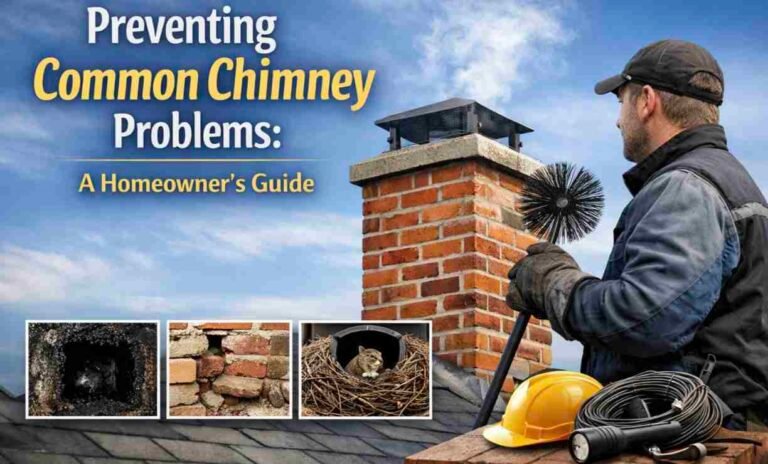
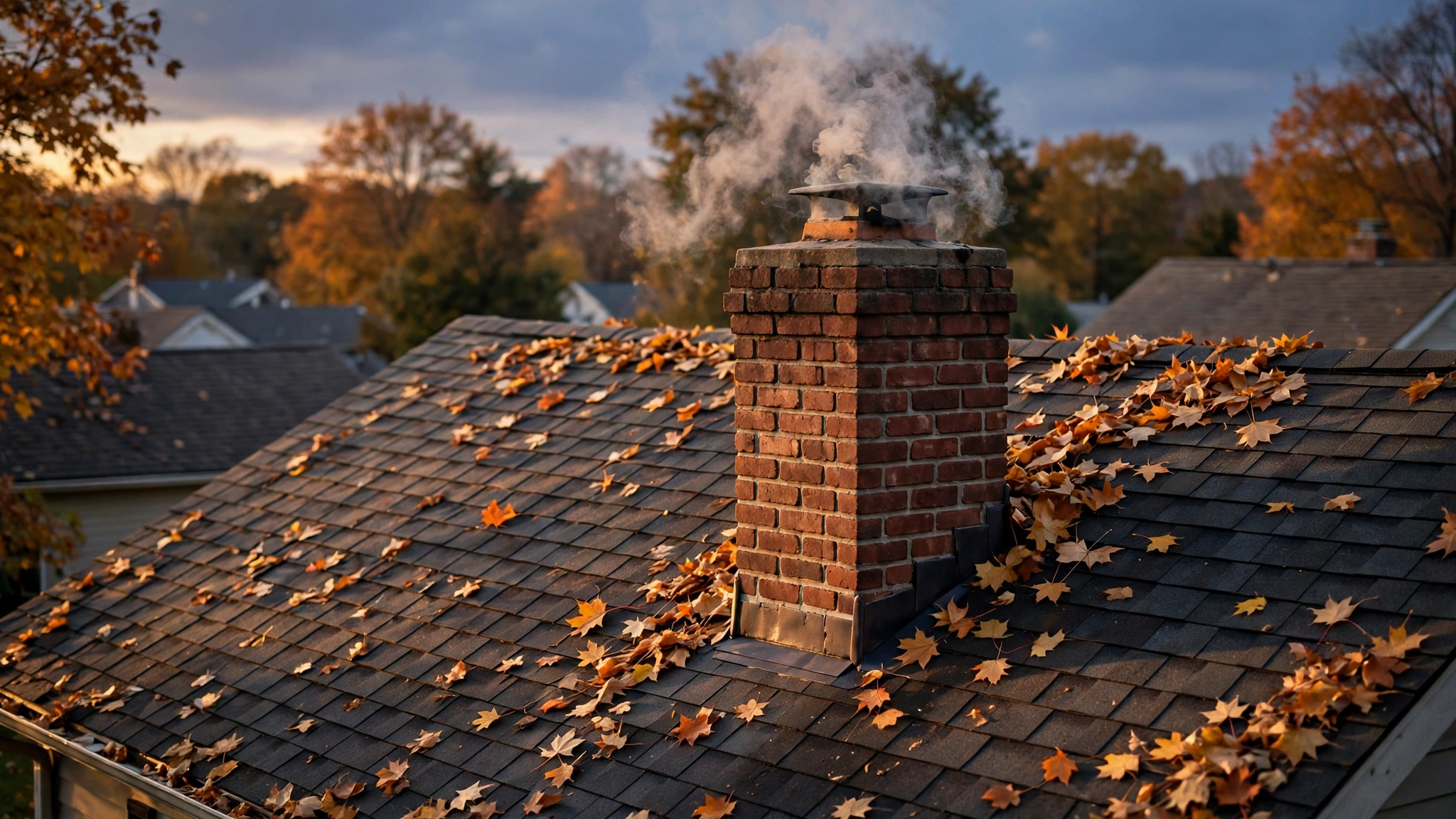
At the very top, the cap keeps rain, leaves, birds and nesting animals out of the flue, while the crown — the concrete or stone slab the flue passes through — sheds water away from the masonry. From the ground with binoculars, or from a ladder if you are confident and safe, check that the cap is present, firmly fixed and not rusted through or clogged with mesh-blocking debris. Then look at the crown for cracks that let water soak in, freeze and split the brickwork over time. Much of preventing common chimney problems comes down to keeping water out at this level, because moisture quietly does more damage than fire ever does.
5. Examine the Flashing and Masonry
Where the chimney meets the roof, metal flashing keeps the joint watertight. Look for flashing that has lifted, rusted or lost its sealant, since leaks here often appear as mysterious stains on ceilings below. Run your eyes over the brickwork too: spalling bricks with flaking faces, soft crumbling mortar and white efflorescence stains all signal water trouble. Repointing tired mortar joints is far cheaper than rebuilding a stack, so treat early wear as a prompt, not a problem to postpone. Inside the loft, check the chimney breast for damp patches after heavy rain.
6. Clear the Area Around the Fireplace
Safety checks are not only about the chimney itself. Keep furniture, rugs, firewood stacks and decorations a sensible distance from the hearth, and fit a sturdy fireguard if children or pets are in the home. Test your smoke alarms and carbon monoxide detector, replacing batteries and checking expiry dates — a blocked or faulty flue can push invisible carbon monoxide into living spaces. Finally, store logs outside or in a dry shed rather than against the house, and keep only a small supply indoors at a time.
7. Know When to Call a Professional
A homeowner can handle the visual checks on this list, but some jobs belong to a certified sweep or mason: sweeping itself, camera inspections of the flue liner, relining, crown rebuilds and any structural repair. Book early in autumn, because good sweeps get busy fast once the cold arrives. Keep a simple record of inspections and work done; it helps with insurance, and it is reassuring if you ever sell the house.
Conclusion
A chimney rarely fails without warning — it simply gives warnings that are easy to miss until you go looking for them. Spending an hour on these seven checks each autumn keeps fires efficient, rooms warm and risks low. Work from the firebox to the cap, fix the small things promptly, and bring in a professional for anything beyond a visual inspection. Do that, and your fireplace will be what it should be all winter: a pleasure, not a worry.