
Dog Walking Essentials: Gear Every Active Dog Owner Needs
Introduction
A daily walk is the highlight of most dogs’ days and, honestly, of many owners’ days too. Yet the difference between a relaxed walk and a stressful one often comes down to a few simple pieces of gear — the dog walking essentials every active owner should have. The wrong lead tangles, a poor collar pulls, and a forgotten water bottle turns a summer outing into a worry. The good news is that a complete walking kit is inexpensive, lasts for years, and fits in one small bag by the door. This guide gathers the essentials every active dog owner needs, explains how to choose them well, and finishes with the small extras that make longer adventures easy.
The Lead and Collar or Harness
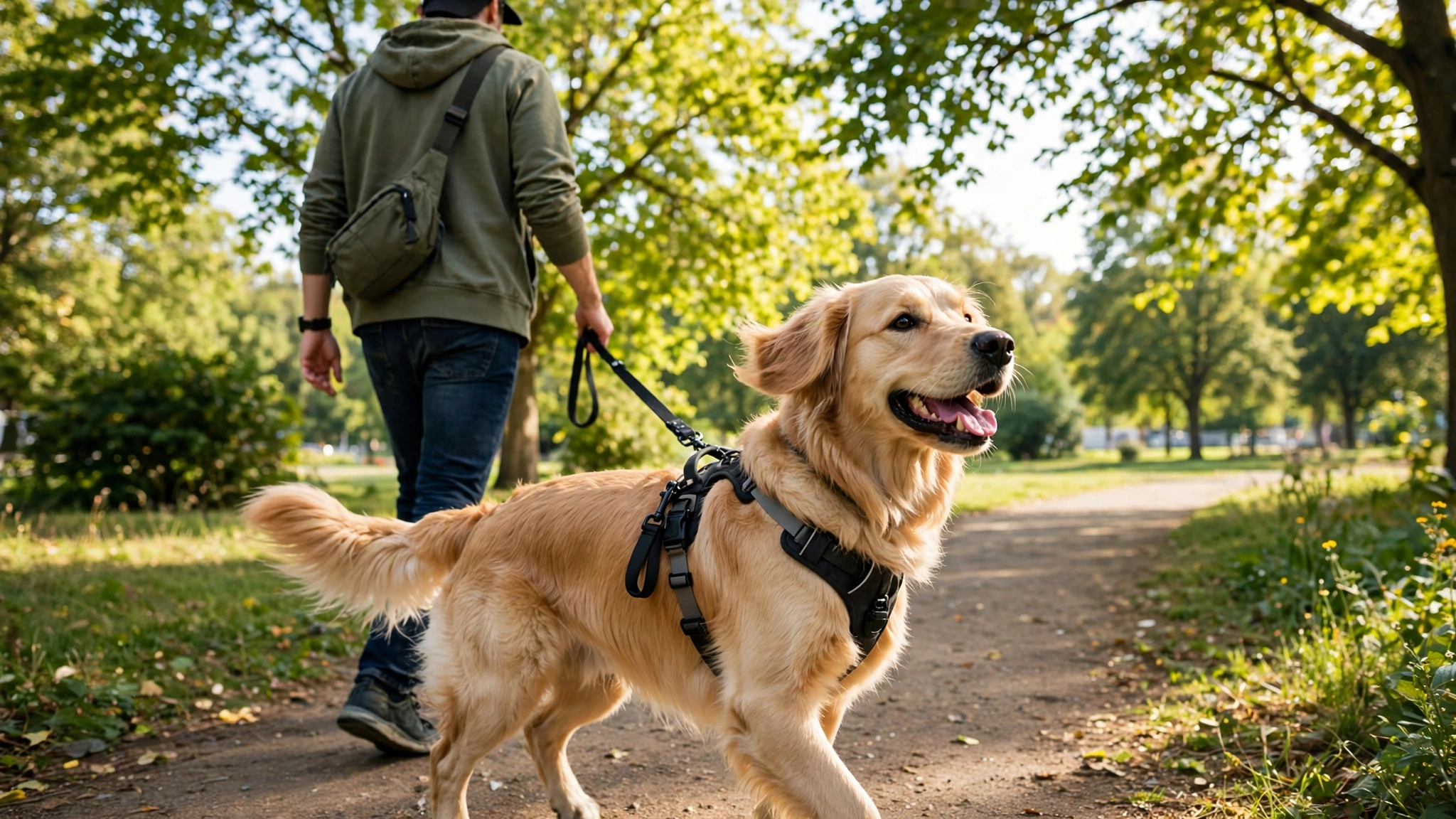
Your lead is the connection between you and your dog, so it should feel secure in your hand and suit your dog’s size and strength. A standard lead of around 1.2 to 1.8 metres gives control in busy areas while still allowing some freedom to sniff. For most dogs, a well-fitted harness is kinder than a collar alone, because it spreads pressure across the chest instead of the neck, which matters for dogs that pull and for small breeds with delicate throats. Collars still have their place for holding an ID tag. Whatever you choose, check the fit regularly: you should be able to slip two fingers underneath, and clips and stitching should be inspected for wear before they fail at the worst moment.
Water, Bowls and Treats on the Move
Dogs overheat faster than people, and they cannot tell you when they are thirsty. On any walk longer than a quick loop, carry water and a collapsible bowl, and offer drinks little and often in warm weather. In summer, walk early or late in the day and test the pavement with your hand; if it is too hot for your palm, it is too hot for paws. A small pouch of treats earns its space too. Treats reward calm behaviour, help with recall training, and can redirect a dog’s attention from a distraction. Choose small, soft treats that can be eaten quickly so training does not interrupt the rhythm of the walk.
Waste Bags and Simple Clean-Up
It is the least glamorous essential and one of the most important. Always carry more waste bags than you think you need, ideally in a dispenser clipped to the lead so they are never left at home. Cleaning up keeps paths, parks and beaches pleasant for everyone and is a legal requirement in many places. A small clip-on pouch can also hold a spare roll, a few tissues and hand sanitiser. Owners who walk in the countryside should take waste home or to the nearest bin rather than leaving bags hanging on fences or branches, a habit that harms the very places dogs love most. Being prepared takes seconds and spares everyone else an unpleasant surprise.
Visibility and Safety After Dark
Short winter days mean many walks happen at dawn, dusk or in full darkness. Reflective gear transforms safety for both of you. A reflective or LED collar or clip-on light makes your dog visible to drivers and cyclists, while a reflective lead, jacket or headtorch does the same for you. Choose routes with street lighting where possible and keep your dog close near roads. It is also worth keeping an ID tag with a current phone number on the collar at all times, and making sure microchip details are up to date. If you are building your kit from scratch, a round-up of the must-have accessories for active dogs is a handy checklist to compare against what you already own.
Extras for Longer Adventures
Once the basics are covered, a few additions open up bigger days out. A long training line lets your dog explore and practise recall safely in open spaces where off-lead freedom is not yet wise. Paw balm or lightweight boots protect feet on rough, icy or very hot ground. A dog-safe seat belt or harness for the car makes the journey to the trail as safe as the walk itself, and a quick-drying towel in the boot saves your seats after muddy or rainy outings. In warm climates, a cooling vest can help on longer hikes. None of these is compulsory, but each removes a common obstacle between you and a longer, happier walk.
Conclusion
Great walks are rarely about expensive equipment. A secure lead, a comfortable harness, water, waste bags and something reflective cover almost everything a dog and owner need. Add treats for training, keep the kit by the door so nothing is forgotten, and replace worn items before they break. With those simple habits in place, the daily walk becomes what it should be: safe, relaxed exercise and the best part of your dog’s day.


