
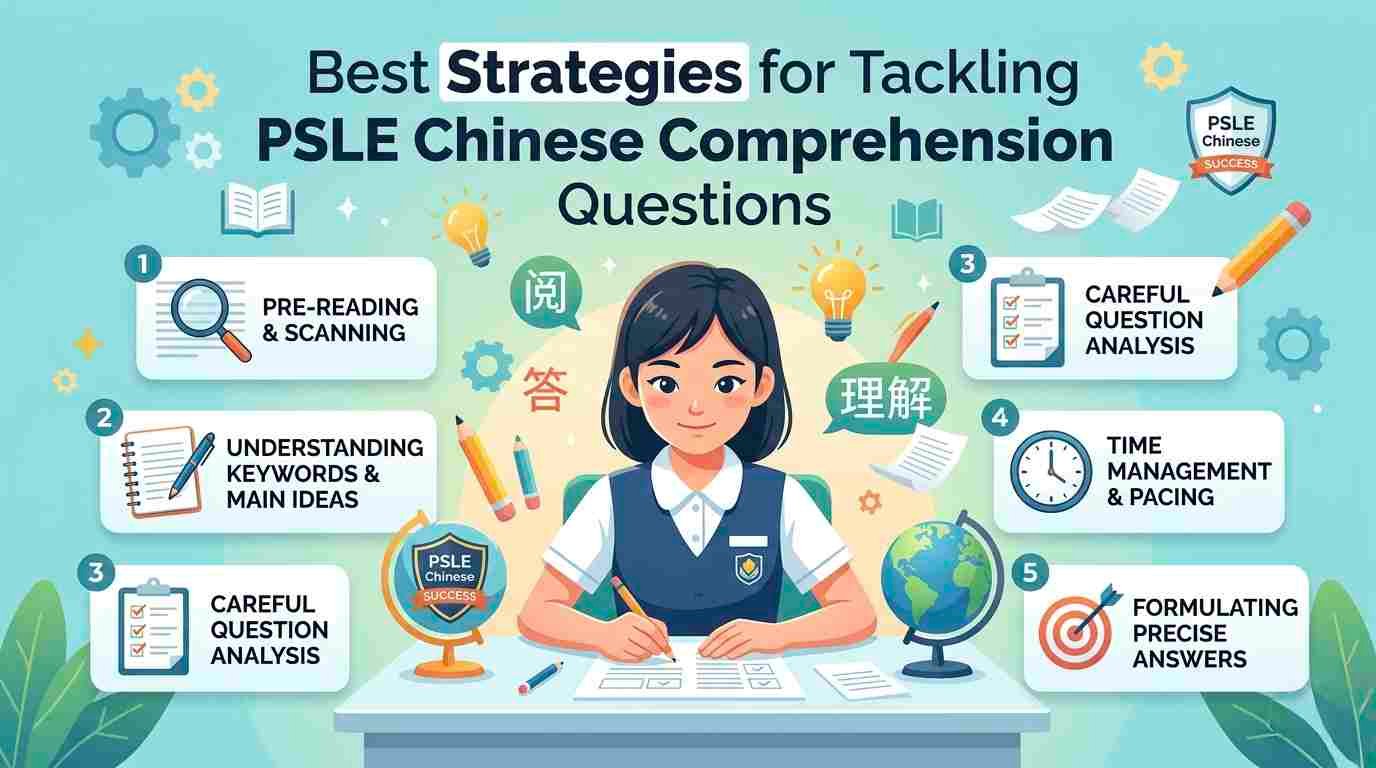
Best Strategies for Tackling PSLE Chinese Comprehension Questions
PSLE Chinese comprehension can feel challenging for many students, especially when passages become more complex and questions require deeper understanding. It is not just about reading the text, but about interpreting meaning, identifying key details, and responding accurately within a limited time.
A common issue students face is knowing the words but not fully understanding the passage. This often leads to incorrect answers, even when the student feels confident. Strong comprehension skills require practice, strategy, and the ability to think critically while reading.
Because of this, parents who are exploring ways to support their child’s progress, especially those looking into a tuition Singapore, often want to know how structured guidance can improve comprehension accuracy and exam performance. With the right approach, students can develop the skills needed to handle even the most challenging questions confidently.
Read with Purpose Instead of Just Reading
Many students read passages passively without a clear goal. This leads to poor understanding and difficulty in answering questions accurately.
Reading with purpose means actively looking for meaning and connections while going through the text. It allows students to stay focused and process information more effectively.
- Identify the main idea of the passage
- Pay attention to how ideas are connected
- Look for clues that explain meaning
- Stay alert to important details
When students read actively, they understand more and answer with greater accuracy. This habit also improves concentration during exams.
Break Down the Passage into Smaller Parts
Long passages can feel overwhelming, especially under exam pressure. Instead of reading everything at once, breaking the passage into sections can help.
This method allows students to understand each part clearly before moving on to the next. It also reduces confusion and improves retention.
- Read one paragraph at a time
- Summarise each paragraph mentally
- Identify the purpose of each section
- Connect ideas across paragraphs
Breaking the passage down makes comprehension more manageable. It also helps students remember key information when answering questions.
Focus on Understanding, Not Memorising
Some students try to remember sentences instead of understanding them. This often leads to incorrect answers when questions are phrased differently.
Comprehension requires interpretation, not memorisation. Students should focus on meaning rather than exact wording.
- Understand the message behind the text
- Paraphrase ideas in your own words
- Avoid copying without thinking
- Look for the writer’s intention
When students understand the passage, they can answer questions more confidently. This also helps with inference-based questions.
Identify Clues Hidden in the Text
Many comprehension questions require students to find answers that are not directly stated. These answers can be found through clues in the passage.
Students need to learn how to read between the lines and interpret meaning based on context.
- Look for cause and effect relationships
- Identify tone and emotions
- Pay attention to descriptive details
- Connect different parts of the passage
Developing this skill helps students handle higher-level questions. It also improves their ability to think critically.
Answer Questions with Precision
Accuracy is more important than length when answering comprehension questions. Many students lose marks because their answers are unclear or too general.
Students should focus on answering exactly what is asked, without adding unnecessary information.
- Read the question carefully
- Answer directly and clearly
- Use relevant details from the passage
- Avoid vague or incomplete responses
Precise answers demonstrate understanding and improve scoring. Clear responses also make it easier for examiners to award marks.
Manage Time Without Rushing
Time pressure can affect performance if students do not have a clear strategy. Managing time effectively allows students to complete all questions with confidence.
Students should practise pacing themselves during practice sessions.
- Allocate time for reading and answering
- Avoid spending too long on one question
- Move on if stuck and return later
- Keep a few minutes for checking
Good time management reduces stress and improves overall performance. It also ensures that no questions are left unanswered.
Understand Different Question Types
PSLE comprehension includes various types of questions, and each requires a slightly different approach. Knowing how to handle each type improves efficiency.
Students should practise identifying question types and applying the right strategy.
| Question Type | Approach to Use |
| Literal Questions | Find answers directly in the text |
| Inference Questions | Use clues to interpret meaning |
| Vocabulary | Understand meaning through context |
| Explanation | Answer clearly with supporting details |
| Opinion-Based | Give logical and relevant responses |
Understanding these differences helps students respond more accurately. It also builds confidence during exams.
Avoid Common Pitfalls
Certain mistakes can reduce marks even when students understand the passage. Being aware of these pitfalls helps avoid unnecessary errors.
Students should focus on improving both accuracy and clarity.
- Misinterpreting the question
- Giving answers without checking relevance
- Overwriting without clear meaning
- Ignoring key details in the passage
Avoiding these mistakes can lead to immediate improvement. Careful reading and attention to detail are essential.
Strengthen Language Skills for Better Understanding
Language ability plays a major role in comprehension. Students with stronger vocabulary and reading habits tend to perform better.
Building language skills supports both understanding and answering questions effectively.
- Read regularly to improve exposure
- Learn new words in context
- Practise sentence construction
- Review commonly used phrases
Stronger language skills make comprehension easier. They also improve confidence when tackling unfamiliar passages.
Learn Through Practice and Reflection
Practice alone is not enough. Students must also reflect on their mistakes to improve effectively.
Reviewing errors helps identify patterns and areas that need attention.
- Analyse incorrect answers
- Understand why mistakes happen
- Learn the correct approach
- Apply improvements in future practice
This process helps students progress steadily. It also builds stronger problem-solving skills over time.
Final Takeaway
Improving PSLE Chinese comprehension requires more than just reading practice. It involves understanding strategies, applying them consistently, and learning from mistakes.
With the right approach, students can develop the ability to analyse passages, identify key information, and answer questions with confidence. At Unitimes Academy, students receive structured guidance and focused training that help them strengthen comprehension skills and achieve better results in PSLE Chinese.
Frequently Asked Questions
1. How can students improve comprehension accuracy?
Students should focus on understanding the passage rather than memorising it. Practising regularly and analysing mistakes helps improve accuracy over time.
2. What is the best way to handle difficult questions?
Break the question down and look for clues in the passage. If unsure, move on and return later with a fresh perspective.
3. How often should students practise comprehension?
Regular practice is important for improvement. Consistent exposure to different passages helps build confidence and strengthens understanding.