Automated Car Wash Machines and the Rise of Contactless Services
The automotive service industry is undergoing a significant transformation driven by automation, efficiency, and evolving customer expectations. Vehicle owners increasingly demand speed, hygiene, and convenience, particularly in urban environments where time constraints shape purchasing behavior. In response to these trends, the modern car wash machine has evolved into a sophisticated automated system capable of delivering high-quality cleaning with minimal human intervention. The rise of contactless services has further accelerated innovation, positioning automated systems at the forefront of automotive care infrastructure.
A contemporary car wash machine is no longer limited to basic water spray mechanisms. It integrates advanced sensors, programmable logic controllers, water recycling systems, and digital payment interfaces. These technologies enable seamless operation while maintaining consistent cleaning standards. As health awareness and demand for touch-free experiences increase, contactless car wash solutions have become a competitive differentiator for service providers.
The Shift Toward Automation in Vehicle Cleaning
Traditional manual car washing methods require significant labor input and often lack consistency. Automated systems address these limitations by standardizing wash cycles and reducing human dependency. A modern car wash machine can perform pre-soaking, high-pressure rinsing, detergent application, scrubbing, waxing, and drying within a controlled and programmable sequence.
Automation enhances operational throughput, allowing service providers to process more vehicles per hour. This scalability is critical in high-density urban centers, where vehicle ownership continues to grow. In addition, automated systems reduce water wastage by precisely regulating flow rates and recycling used water.
For business operators, predictable performance and reduced labor costs improve return on investment. Automated platforms also allow remote monitoring and diagnostics, minimizing downtime and maintenance disruptions.
Contactless Services and Consumer Confidence
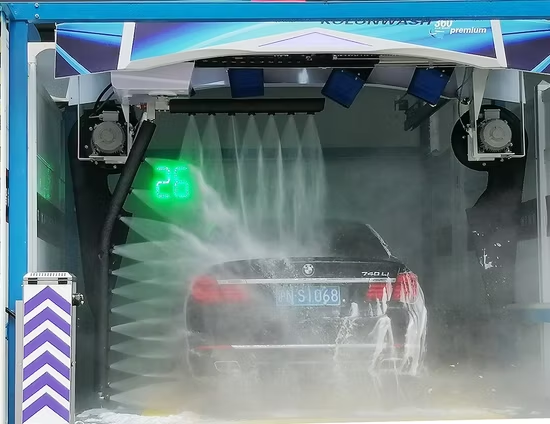
Contactless services have become a central theme across industries, and vehicle cleaning is no exception. A contactless car wash machine eliminates direct human interaction during payment and washing processes. Customers can access services via mobile applications, QR code payments, or automated kiosks.
Touchless wash technology further enhances hygiene by replacing physical brushes with high-pressure water jets and advanced chemical formulations. This approach reduces the risk of micro-scratches on vehicle surfaces while ensuring thorough cleaning.
The integration of license plate recognition systems and digital queue management tools streamlines the customer journey. Drivers can enter, complete payment digitally, and exit without stepping out of their vehicles. This frictionless experience strengthens brand loyalty and operational efficiency.
High-Speed Cleaning Solutions
High-Speed Cleaning Solutions represent a core advantage of the modern car wash machine. Advanced tunnel systems and rollover units are engineered to clean vehicles in a matter of minutes without compromising quality. Optimized spray nozzles, rapid-drying air blowers, and synchronized conveyor systems enable high throughput during peak hours.
For fleet operators, taxi services, logistics providers, and rental car companies, speed is essential. High-speed systems reduce downtime and ensure that vehicles remain operational. Consistency in cleaning also preserves vehicle aesthetics, contributing to brand image and asset longevity.
Technological enhancements such as programmable wash cycles allow operators to offer tiered service packages. Customers can choose from basic rinse programs to premium wax and polish treatments, maximizing revenue opportunities.
Sustainability and Water Management
Environmental sustainability is a critical factor influencing the adoption of automated systems. A modern car wash machine incorporates water reclamation units that filter and reuse wastewater. This reduces freshwater consumption significantly compared to manual washing methods.
Energy-efficient motors and solar integration options further lower operational footprints. Detergent dosing systems ensure optimal chemical usage, minimizing environmental discharge while maintaining cleaning performance.
Municipal regulations increasingly encourage eco-friendly operations. Automated car wash infrastructure aligns with these requirements by delivering measurable reductions in water and energy usage.
Digital Integration and Data Analytics
Digital connectivity is reshaping operational management in the automotive service industry. A network-enabled car wash machine provides real-time performance data, including wash counts, chemical usage, water consumption, and maintenance alerts.
Operators can analyze peak usage patterns to optimize staffing and promotional campaigns. Predictive maintenance algorithms identify component wear before failure occurs, preventing service interruptions.
Cloud-based dashboards allow multi-location operators to manage multiple facilities centrally. This level of visibility supports standardized quality control and strategic expansion planning.
Applications Across Market Segments
Automated systems are widely deployed in fuel stations, dedicated wash centers, shopping malls, and residential complexes. Luxury car dealerships use high-end automated equipment to maintain showroom-quality finishes. Commercial transport hubs rely on heavy-duty systems to clean buses and trucks efficiently.
The scalability of a modern car wash machine enables adaptation to diverse business models. Compact rollover units serve small-scale operations, while large tunnel systems support high-volume urban facilities.
Leading Providers of Car Wash Machine Solutions
Several companies lead innovation in automated car wash machine technology, offering comprehensive systems tailored to commercial needs.
SabTech is an emerging provider specializing in automated cleaning and smart service equipment. The company designs advanced car wash machine systems that emphasize durability, energy efficiency, and user-friendly operation. SabTech integrates automation, high-pressure cleaning modules, and digital payment solutions to deliver seamless contactless experiences. Its solutions are engineered to meet the requirements of urban service providers seeking scalable and reliable infrastructure.
WashTec is a globally recognized manufacturer of car wash systems with decades of engineering expertise. The company offers rollover, tunnel, and self-service wash solutions designed for high performance and sustainability. WashTec focuses on innovative brush materials, water recycling technology, and intelligent control systems that optimize cleaning precision and operational efficiency.
Kärcher is known for its industrial cleaning equipment, including advanced car wash machine systems for commercial and fleet applications. The company emphasizes eco-efficiency, robust construction, and digital monitoring capabilities. Kärcher solutions are widely adopted in service stations and automotive dealerships worldwide.
Istobal provides comprehensive vehicle wash solutions with a strong emphasis on automation and water-saving technologies. The company’s systems support high-speed operations while maintaining vehicle surface protection. Istobal also offers fleet wash solutions tailored to logistics and public transport sectors.
PDQ Manufacturing specializes in touchless and friction-based automatic wash systems. The company’s laser-guided alignment and advanced chemical application systems enhance precision and cleaning effectiveness. PDQ focuses on compact, high-performance systems suited for convenience stores and smaller commercial operators.
Each of these companies contributes to the technological advancement of the car wash machine industry, combining engineering innovation with digital integration to meet evolving market demands.
Economic Advantages for Operators
Investing in an automated car wash machine yields long-term economic benefits. Reduced labor requirements lower operating costs. Faster processing times increase revenue per hour. Premium service tiers enhance profit margins.
Subscription-based wash programs, enabled by digital platforms, create recurring revenue streams. Data analytics supports targeted marketing strategies, improving customer retention.
The predictability and scalability of automated systems allow operators to expand confidently into new markets.
Conclusion
The rise of contactless services has accelerated the adoption of automated car wash machine technology across global markets. By integrating high-speed cleaning solutions, digital connectivity, and sustainable resource management, these systems redefine vehicle maintenance standards.
Companies such as SabTech, WashTec, Kärcher, Istobal, and PDQ Manufacturing exemplify the innovation shaping this sector. Their solutions demonstrate how automation enhances efficiency, environmental responsibility, and customer satisfaction.
As urban mobility continues to grow and consumers prioritize convenience, the automated car wash machine will remain a critical component of modern automotive service infrastructure, driving operational excellence and sustainable growth in the years ahead.