
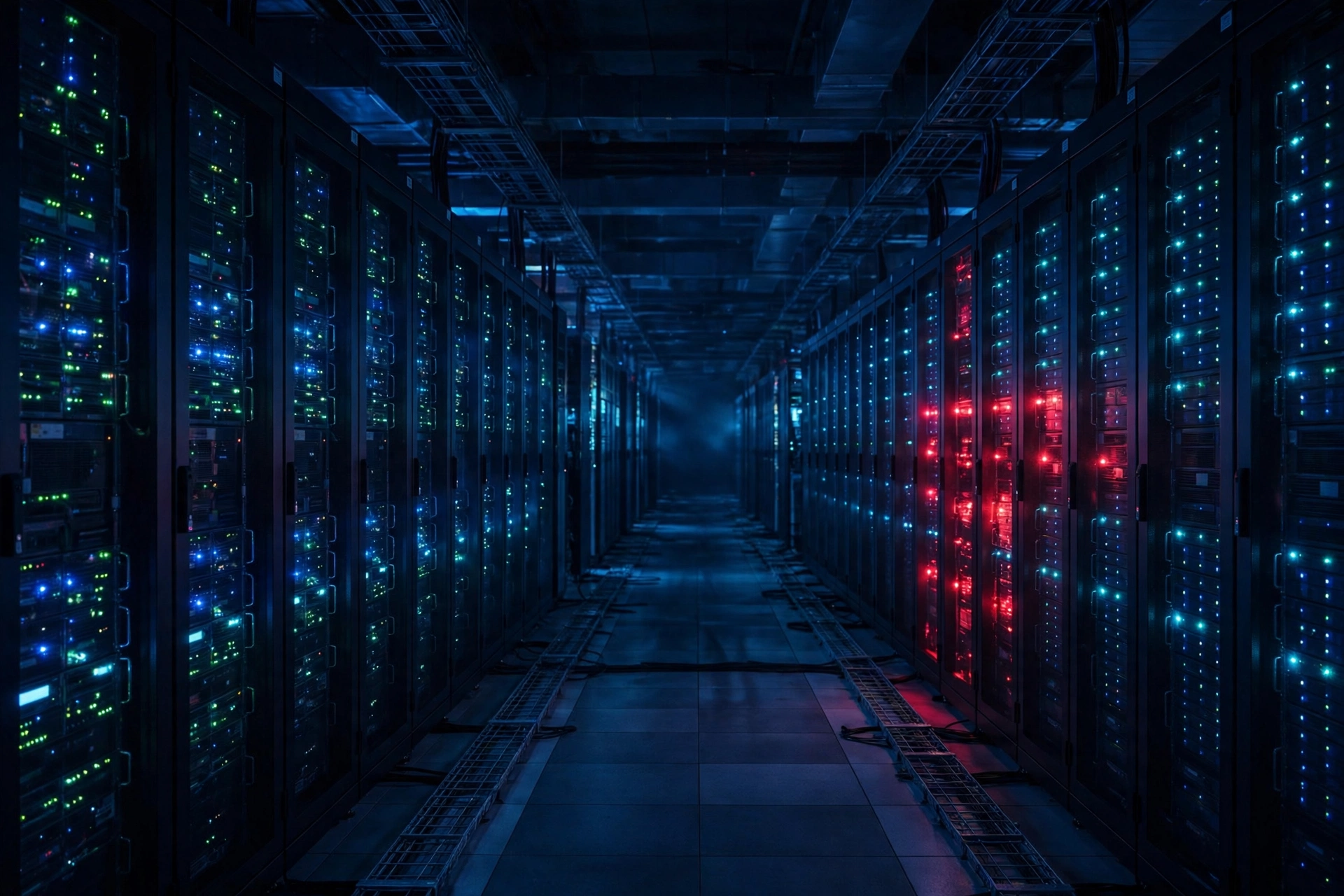
November 2026 Technology Outages: What Happened, Why It Happened, and What It Means
In a single week in November 2026, the technology that millions of Americans rely on every day broke down again and again. Microsoft‘s services went dark. The Federal Aviation Administration ordered a nationwide ground stop. Some of the biggest banks in the United States could not process payments properly. United Airlines could not get planes off the ground on schedule. Apple services stumbled. And even the National Security Agency’s own classified internal network went down for three days.
Each failure on its own would have been a major news story. Coming one after another, they created something bigger: a week in which it genuinely felt as if everything was breaking at once. Rumors spread fast, panic buying followed, and millions of people asked the same question — was somebody attacking America’s technology?
The short answer, according to the officials who investigated, is no. The longer answer is more interesting, and more useful. What happened in November 2026 says a lot about how fragile modern technology has become, and about what businesses and ordinary users should do differently.
The Week Everything Broke
Microsoft goes down first
The wave began on November 12, when Microsoft suffered a major outage that lasted into November 14. The cause, Microsoft later said, was a software defect that had been sitting quietly in its networking gateway servers for months. A set of network traffic changes and reduced server capacity turned that hidden defect into a full-blown failure.
Microsoft was clear on one point: the incident was not caused by a cyberattack. It was an old bug meeting new conditions — the kind of failure that is easy to miss until the day it is not.
Planes grounded across the country
On November 13, the FAA ordered a nationwide ground stop. The reason was instability in the telecommunications network that the agency’s older equipment depends on. Excessive data traffic overwhelmed legacy systems, and investigators pointed to possible contributing problems at facilities in Texas and Arkansas. The precise root cause was still under investigation when the stop was lifted the same day, but the effect was immediate: passengers stuck at airports across the country, including John F. Kennedy International Airport in New York.
Workday, the banks, and the airlines
Also on November 13, Workday, the human-resources software used by thousands of companies, suffered a service disruption across two of its data centers. For many businesses, that meant payroll, hiring and everyday HR work simply stopped for a day.
Then came Monday, November 16. JPMorgan Chase, the largest bank in the United States, was hit by a software bug in one of its on-premises hardware systems. Transaction processing slowed down, and the effects rippled outward: customers of Bank of America, Wells Fargo, U.S. Bank, Truist and Capital One reported problems accessing accounts and processing payments. Several of those banks said their own systems were not directly affected — the delays came through their connections to JPMorgan’s systems. Some Zelle payments were delayed, although the Zelle network itself kept running. By Monday evening, JPMorgan said transactions were processing normally again.
The same day, United Airlines suffered a software problem that hit the systems crews depend on: crew-facing apps, flight planning software, weather information and other tools needed for a safe takeoff. Flights were delayed while the airline worked through the problem.
The NSA and Apple
On November 17, the outage wave reached the United States government itself. The National Security Agency’s internal communications network, known as NSANet, went down. The cause, officials later said, was the agency’s handling of software updates meant to fix vulnerabilities in PHP, a programming language that powers a large share of the world’s websites. The updates crashed the messaging system, and for three days only limited numbers of staff were allowed into the NSA’s headquarters at Fort Meade, Maryland, to keep the network from crashing again. The network was restored on November 20. Officials said there was no evidence of a cyberattack.
Also on November 17, Apple customers began reporting problems with iCloud, Apple Pay, the App Store, Apple Music and AppleCare. Apple attributed the trouble to an internal update rather than an attack, and worked through the week to restore the remaining services.
Was It a Cyberattack?
With so many failures landing in the same week, suspicion was natural. The timing made it worse: the outages came right after the midterm elections, around reports of a possible dirty bomb threat in Washington, and during a presidential trip to Asia. Online, theories spread that the outages were a coordinated attack, or the beginning of a long blackout.
Officials pushed back firmly. On November 18, Secretary of State Marco Rubio said there was no indication the incidents were related. In his words, there was zero evidence that any of the individual instances had anything to do with hackers, criminals, or another nation state.
The same day, Director of National Intelligence Jay Clayton, Homeland Security Secretary Markwayne Mullin and FBI Deputy Director Christopher Raia testified before the House Committee on Homeland Security. Clayton described the outages as separate incidents tied to maintenance and technical changes, not a coordinated or state-sponsored attack. He pointed to something important: a substantial increase in system upgrades being carried out by government agencies and private companies at the same time.
That last point matters. It is easy to hear “separate incidents” and think the timing was a coincidence. It was not exactly a coincidence — many organizations were doing similar maintenance at the same time, for similar reasons, and the failures clustered together.
Two real cyberattacks did happen that same week, which added to the confusion. On November 17, an attack on the platform Optimizely compromised the websites of 178 organizations, including Zoom, HSBC, Equifax, CNN, Salesforce and IKEA. And on November 19, reports emerged of an attack on a third-party provider that exposed some customer data, including names and email addresses, from JPMorgan Chase, Visa and Mastercard. These were genuine attacks — but they were separate events from the outages, and mixing them together only made the picture murkier.
The AI Connection Nobody Expected
One of the most interesting explanations came from reporting on why so many systems were being updated at once. According to Reuters, some of the upgrades and patches being rolled out were intended to fix vulnerabilities that artificial intelligence tools had helped discover. Private researchers had disclosed serious vulnerabilities in PHP the previous month, vulnerabilities that AI tools helped find, and the NSA itself had urged organizations to apply the patches.
The irony is sharp: the patches meant to make systems safer may themselves have caused some of the disruption. When thousands of organizations rush to apply the same kinds of fixes at the same time, the risk of something going wrong rises. A single bad update can take down a system; a wave of updates can take down many.
This is a new kind of problem. AI is now finding software flaws faster than ever before, which is good. But the fixes still have to be tested, rolled out and watched by humans, and that work does not scale as fast as the discovery of the flaws. The November outages may be an early warning of what that gap looks like in practice.
The Rumor Problem
The outages also showed how quickly fear spreads when technology fails. Panic buying surged, driven by online rumors and misinformation. Researchers found that suspected bot accounts were responsible for around 30 percent of the posts promoting conspiracy theories about the events.
The confusion was made worse by an Emergency Alert System test scheduled for November 17, which fed claims — spread internationally — that a global or 90-day blackout was about to begin. There was no blackout. But the episode showed how an information vacuum during an outage gets filled within hours, often by the worst available theories.
Senator James Lankford demanded an investigation into the outages. Meanwhile, the public debate moved on to business continuity and cyber resilience: how do organizations keep working when the systems they depend on fail?
What It Means for Businesses
For businesses, the November 2026 outages carry a clear lesson: the systems you depend on will fail, and the question is what happens next.
A few practical points stand out:
- Single points of failure are everywhere. One bank’s software bug slowed payments at several other banks. One software update took down an intelligence agency’s internal network for three days. Modern systems are deeply connected, and a failure in one place travels fast.
- Maintenance is now a risk event. The outages were largely caused by updates, patches and traffic changes — not by attackers. Every major change to a critical system deserves the same care as a security incident: testing, staged rollouts, and a way back if something goes wrong.
- Backups must be real, not theoretical. Having a backup system only helps if it has been tested recently and can actually take over. Many organizations discover the gaps in their backup plans only during a real failure.
- Communication matters as much as the fix. During the outage week, the organizations that communicated clearly — what was broken, what was being done, when it would be fixed — kept far more trust than those that stayed silent while rumors filled the gap.
What You Can Do
Ordinary users cannot prevent the next Microsoft or bank outage. But a few simple habits make the next one much less painful:
- Keep a payment backup. Carry a second payment method, and keep a small amount of cash available. When one bank’s systems slow down, having an alternative means the difference between buying groceries and going home empty-handed.
- Do not trust the first rumor. During an outage, check official sources — the company’s status page, a government agency, or a major news outlet — before believing or sharing claims about what caused it.
- Keep offline copies of what matters. Important documents, tickets and contact numbers should exist somewhere that does not need the internet to open.
- Build slack into travel. If you fly on a day when systems are failing, expect delays. Arriving early and keeping your plans flexible costs little and saves a lot.
- Update your own devices, but patiently. The same lesson applies at home: install updates, but do not install them all at once on every device you own, and keep a backup first.
The Bottom Line
The November 2026 technology outages were not a cyberattack, and they were not a coincidence either. They were the result of many organizations doing similar maintenance at the same time, on systems that are more connected — and more fragile — than most people realize. A hidden software bug at Microsoft, aging equipment at the FAA, a faulty update at the NSA, a bank’s hardware problem: different causes, same week, same lesson.
Technology will keep failing. The organizations and individuals who handle it best will not be the ones who never experience an outage. They will be the ones who planned for it, communicated through it, and learned from it. November 2026 gave everyone a free lesson. The smart move is to use it before the next one arrives.


2 Comments