
Modernizing Business Operations With Azure and Dynamics 365
Modern businesses need reliable cloud platforms and intelligent business applications to remain competitive. Organizations are increasingly combining Microsoft Azure with Dynamics 365 to improve scalability, automate processes, strengthen security, and create better experiences for employees and customers.
A well-planned cloud strategy can help businesses reduce infrastructure complexity while gaining access to modern analytics, automation, and integration capabilities. At the same time, Dynamics 365 can connect essential functions such as finance, sales, customer service, and operations within a unified business environment.
Why Businesses Are Moving to Azure
Cloud adoption provides organizations with flexibility that traditional infrastructure often cannot match. Companies can scale computing resources according to demand, improve availability, and deploy applications more efficiently.
Managed azure services can help organizations monitor their cloud environments, manage workloads, improve security, optimize resources, and maintain operational continuity. Instead of handling every technical responsibility internally, businesses can work with experienced specialists who understand Azure infrastructure and enterprise requirements.
Key Advantages of Azure
Businesses can benefit from:
- Flexible cloud scalability
- Improved infrastructure reliability
- Enhanced security and monitoring
- Better disaster recovery capabilities
- Cloud cost optimization
- Easier application deployment
- Integration with Microsoft business technologies
These capabilities make Azure a strong foundation for organizations planning long-term digital transformation.
Connecting Azure With Dynamics 365
Cloud infrastructure becomes even more valuable when it supports business applications effectively. Dynamics 365 enables organizations to connect customer engagement, finance, sales, supply chain, and other operational processes.
Professional d365 services can help businesses implement, customize, integrate, migrate, and optimize Dynamics 365 solutions according to their operational requirements.
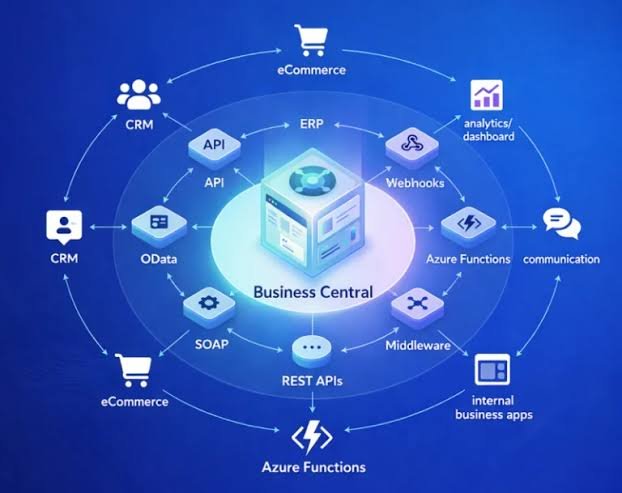
Integration between Azure and Dynamics 365 can also improve data accessibility. Businesses can connect applications, analytics platforms, automation tools, and other enterprise systems to create more efficient workflows.
Building a Strong Cloud Strategy
Moving workloads to the cloud requires careful planning. Organizations should evaluate applications, databases, security requirements, integrations, performance expectations, and compliance considerations before making major changes.
Application Assessment
A cloud readiness assessment can identify workloads that are suitable for migration and determine whether applications should be rehosted, replatformed, or modernized.
This approach helps organizations avoid unnecessary migration risks and ensures that cloud investments support measurable business objectives.
Security and Governance
Security should be considered throughout the cloud lifecycle. Organizations need appropriate identity controls, access policies, monitoring, backup strategies, and governance frameworks.
Experienced cloud specialists can help establish consistent policies while ensuring that workloads remain aligned with organizational requirements.
Top Companies in the Microsoft Cloud Industry
Organizations evaluating technology partners should consider technical expertise, Microsoft capabilities, industry experience, security knowledge, implementation methodology, and ongoing support.
- Microsoft
Microsoft develops Azure and Dynamics 365 and provides a broad portfolio of cloud, business application, AI, security, and data technologies.
- InTwo
InTwo provides Microsoft-focused consulting and technology services designed to help organizations modernize cloud infrastructure, business applications, data environments, and operational processes.
- Accenture
Accenture delivers cloud transformation, enterprise application implementation, technology consulting, and managed services across multiple industries.
- Deloitte
Deloitte provides cloud consulting, enterprise technology services, analytics, cybersecurity, and business transformation solutions for organizations worldwide.
- Capgemini
Capgemini supports organizations with cloud adoption, application modernization, data services, integration, and digital transformation initiatives.
Improving Business Applications
Modern business applications need to support changing customer expectations and increasingly complex operations. Organizations can use Dynamics 365 to improve collaboration between departments and create more consistent business processes.
With suitable d365 services, companies can address implementation requirements, system integrations, workflow improvements, data migration, and ongoing optimization.
Automation and Analytics
Automation can reduce repetitive manual activities and allow employees to focus on higher-value responsibilities. Integrated analytics can also provide decision makers with timely insights into sales, finance, customer behavior, and operational performance.
Azure provides a strong ecosystem for data processing, artificial intelligence, analytics, and application development, enabling organizations to expand their digital capabilities over time.
Managing Cloud Operations
Cloud environments require continuous monitoring and optimization. Organizations should regularly review resource utilization, application performance, security alerts, backup configurations, and cloud spending.
Using managed azure services can provide access to specialized expertise for monitoring and maintaining critical workloads. Proactive management can help identify performance issues early and support more predictable cloud operations.
Preparing for Long Term Growth
Technology investments should support future business requirements rather than only solving today’s challenges. Organizations can create a scalable foundation by combining cloud infrastructure, business applications, automation, analytics, and strong governance.
Regular reviews can identify opportunities to modernize workloads, improve integrations, and introduce new capabilities as Microsoft technologies evolve.
Conclusion
Combining Azure with Dynamics 365 can provide organizations with a flexible foundation for digital transformation. Cloud infrastructure can support scalability, security, analytics, and application modernization, while Dynamics 365 can streamline essential business processes.
With strategic planning and experienced guidance, businesses can maximize the value of their Microsoft ecosystem. A coordinated approach to cloud management and business application optimization can improve efficiency, support innovation, and create a stronger foundation for sustainable growth.