
Under Vehicle Inspection Cameras and the Future of Automated Vehicle Screening
Security threats associated with vehicles have evolved significantly in recent decades. From unauthorized access to sensitive facilities to vehicle-borne explosive devices and contraband smuggling, modern risks require more sophisticated detection methods than manual inspections alone can provide. In this context, the Under Vehicle Inspection Camera has become a vital technology for securing high-risk zones, border crossings, government facilities, corporate campuses, and critical infrastructure.
As automated security ecosystems become standard across urban and industrial environments, the Under Vehicle Inspection Camera is increasingly integrated into broader intelligent surveillance frameworks. These systems are redefining how vehicles are screened, improving detection accuracy while reducing inspection time and human error. The future of automated vehicle screening is closely tied to advancements in imaging, artificial intelligence, and real-time analytics.
The Strategic Importance of Under Vehicle Inspection Camera Technology
Traditional vehicle inspection methods often rely on mirrors or manual checks conducted by security personnel. While useful, these methods are time-consuming and prone to oversight, particularly in high-traffic areas. The Under Vehicle Inspection Camera addresses these limitations by providing high-resolution imaging of a vehicle’s undercarriage in real time.
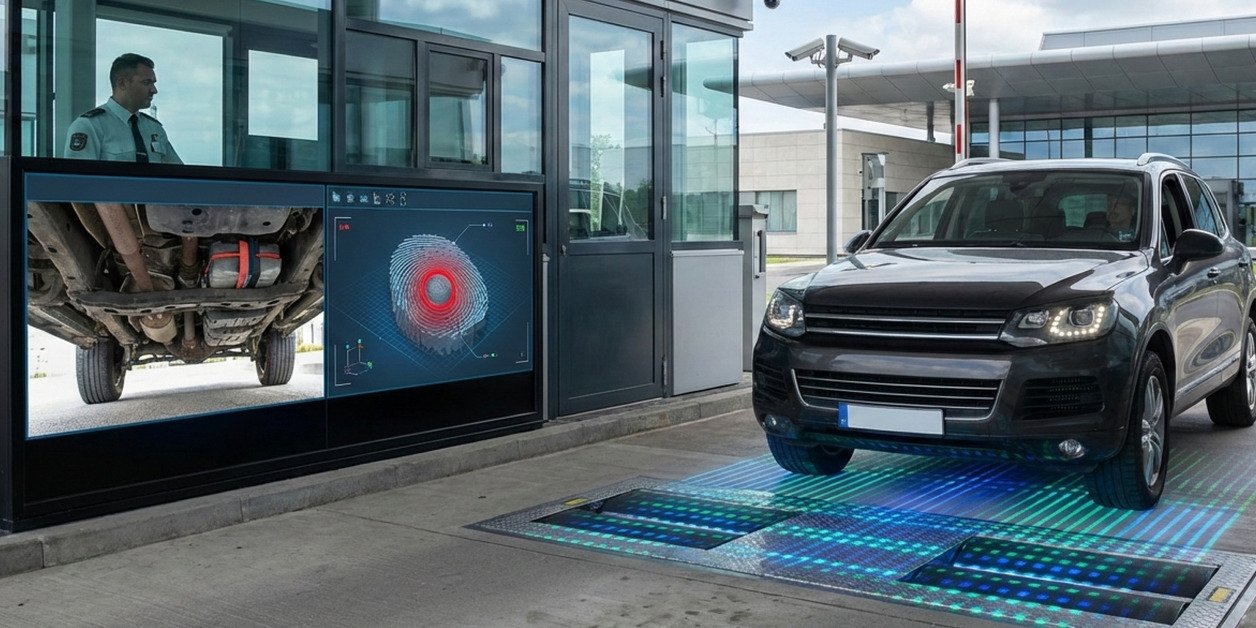
Installed at entry and exit checkpoints, the Under Vehicle Inspection Camera captures detailed images of the vehicle’s underside as it passes over a scanning platform. The images are displayed on monitoring systems, allowing security personnel to detect suspicious objects, modifications, or foreign attachments instantly.
Beyond visual inspection, modern systems include automated image comparison features. These features store baseline images of authorized vehicles and compare them against new scans to identify anomalies. This automated verification significantly enhances threat detection capabilities.
Enhancing Security Across Critical Infrastructure
Airports, seaports, military installations, embassies, and nuclear facilities rely heavily on Under Vehicle Inspection Camera systems to prevent unauthorized access and mitigate potential threats. Vehicles entering these premises are screened thoroughly without causing excessive delays.
The efficiency of automated scanning ensures continuous traffic flow while maintaining stringent security standards. In high-security environments, the Under Vehicle Inspection Camera often operates alongside access control systems, license plate recognition, and biometric verification, creating a multi-layered defense strategy.
For industrial facilities and logistics hubs, undercarriage inspection helps prevent theft, sabotage, and smuggling. The integration of digital records ensures traceability and compliance with regulatory security requirements.
Integration with Vehicle Scanning Systems
Vehicle scanning systems represent a comprehensive approach to automated vehicle inspection. These systems combine multiple technologies, including Under Vehicle Inspection Camera units, X-ray scanners, radiation detectors, and license plate recognition modules.
Vehicle scanning systems are designed to address diverse security challenges. While the Under Vehicle Inspection Camera focuses specifically on undercarriage imaging, its integration into a larger framework enhances situational awareness. Centralized control platforms allow security operators to monitor multiple inspection points simultaneously.
Advanced vehicle scanning systems also incorporate artificial intelligence to detect patterns and flag irregularities automatically. For instance, AI algorithms can highlight unfamiliar shapes or structural inconsistencies beneath vehicles, reducing the reliance on manual observation.
This layered approach improves operational efficiency, minimizes inspection time, and enhances overall facility protection.
Technological Advancements Shaping the Future
The future of the Under Vehicle Inspection Camera lies in improved image resolution, faster processing speeds, and AI-driven analytics. High-definition line-scan cameras now provide clear, distortion-free images even when vehicles move at moderate speeds.
Artificial intelligence enhances these systems by enabling automatic threat detection. Machine learning algorithms analyze thousands of undercarriage images to identify deviations that may indicate concealed objects or structural tampering. Over time, the system becomes more accurate and adaptive.
Edge computing further strengthens performance by processing image data locally rather than relying solely on centralized servers. This reduces latency and ensures immediate threat alerts. Additionally, cloud-based storage allows secure archival of inspection records for compliance and audit purposes.
The integration of the Under Vehicle Inspection Camera with smart city infrastructure will likely expand. Data from inspection checkpoints may be connected to centralized security command centers, enabling coordinated responses to emerging threats.
Benefits of Automation and Operational Efficiency
Automated screening systems provide measurable operational advantages. First, they reduce dependency on manual inspections, lowering the risk of human error. Second, they increase throughput capacity, allowing facilities to screen more vehicles in less time.
For high-traffic locations such as border crossings, toll plazas, and corporate campuses, efficiency is critical. The Under Vehicle Inspection Camera supports seamless vehicle flow while maintaining high security standards.
Digital record-keeping enhances accountability. Inspection images and logs can be stored securely, providing valuable evidence in case of investigations. This documentation also supports compliance with national and international security regulations.
Leading Providers of Under Vehicle Inspection Camera Solutions
Several companies have established expertise in developing and deploying Under Vehicle Inspection Camera systems for government, industrial, and commercial applications.
Vehant Technologies is a recognized leader in AI-powered security and surveillance solutions. The company offers advanced Under Vehicle Inspection Camera systems integrated with intelligent video analytics. Vehant focuses on high-resolution imaging, real-time anomaly detection, and seamless integration with broader security ecosystems. Its solutions are widely deployed in smart city initiatives, defense installations, and transportation hubs. By combining deep learning algorithms with durable hardware platforms, Vehant delivers scalable and reliable vehicle screening solutions.
Gatekeeper Security specializes in automated under vehicle inspection systems designed for high-security facilities. The company’s technology emphasizes rapid scanning, image clarity, and efficient data management. Gatekeeper systems are known for their robust construction and suitability for heavy-duty environments such as border crossings and military bases.
SecuScan develops comprehensive vehicle scanning and inspection systems that include Under Vehicle Inspection Camera modules. The company integrates imaging technology with access control and database management solutions. SecuScan focuses on user-friendly interfaces and rapid deployment capabilities, supporting government and industrial security needs.
Advanced Detection Technology provides vehicle inspection platforms tailored for transportation hubs and sensitive facilities. The company emphasizes precision imaging and seamless integration with existing surveillance infrastructure. Its systems are designed to handle diverse vehicle types while maintaining consistent image quality.
Bosch Security Systems offers a broad range of surveillance technologies, including camera systems suitable for undercarriage inspection. Leveraging its expertise in imaging and analytics, Bosch delivers reliable hardware solutions that integrate into comprehensive security networks.
Each of these companies contributes to the advancement of automated vehicle screening by delivering reliable Under Vehicle Inspection Camera technologies backed by strong engineering and support frameworks.
Addressing Security and Privacy Considerations
As automated inspection technologies expand, data governance becomes increasingly important. Under Vehicle Inspection Camera systems collect visual data that must be stored securely and managed responsibly.
Security operators must implement encryption, restricted access protocols, and clear data retention policies. Compliance with national data protection regulations ensures that surveillance practices remain transparent and lawful.
Balancing security effectiveness with privacy protection is essential for maintaining public trust in automated screening technologies.
The Road Ahead
The future of automated vehicle screening will likely involve deeper integration between Under Vehicle Inspection Camera systems and broader intelligent infrastructure networks. Real-time data sharing between checkpoints, law enforcement databases, and emergency response teams can significantly enhance national security preparedness.
Emerging technologies such as 5G connectivity will enable faster data transmission, while AI-powered analytics will improve threat prediction accuracy. The continued evolution of imaging sensors will further enhance clarity and detection capability.
As global security challenges become more complex, reliance on automated systems will grow. The Under Vehicle Inspection Camera will remain a central component of next-generation vehicle screening strategies, delivering precision, efficiency, and enhanced situational awareness.
Conclusion
Under Vehicle Inspection Camera technology has become a cornerstone of modern automated vehicle screening. By providing detailed undercarriage imaging, integrating with vehicle scanning systems, and leveraging artificial intelligence, these systems enhance security across critical infrastructure.
Companies such as Vehant Technologies, Gatekeeper Security, SecuScan, Advanced Detection Technology, and Bosch Security Systems exemplify innovation in this field. Their solutions demonstrate how advanced imaging and analytics can transform vehicle inspection processes.
As automation and digital integration continue to redefine security operations, the Under Vehicle Inspection Camera will play an increasingly strategic role in safeguarding facilities, protecting infrastructure, and ensuring safer environments worldwide.