Modular Water Treatment: How Container Plants Serve Towns and Industry
Introduction
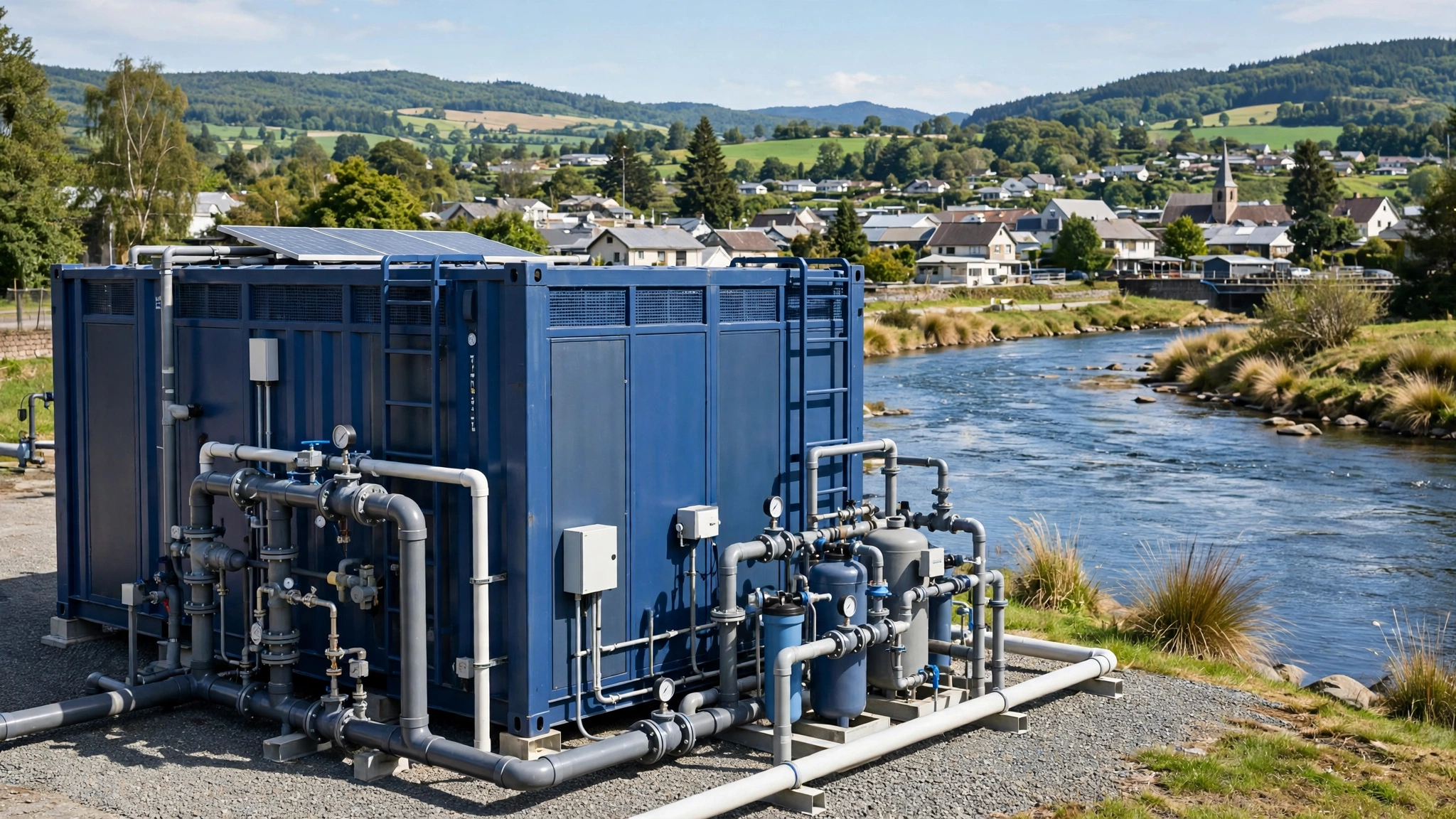
Clean water and safe wastewater handling are basic needs, yet building a traditional treatment plant takes years of construction, heavy machinery and a large permanent site. Modular water treatment offers a different route. Instead of pouring concrete and assembling equipment piece by piece outdoors, engineers build the plant inside standard shipping containers at a factory, test it there, and then deliver it to the site almost ready to run. These compact plants now serve small towns, housing developments, resorts, farms, mines and factories around the world. This article explains how container plants work, where they make the most sense, and what their strengths and limits look like in everyday use.
How a Container Plant Is Put Together
Inside a container plant, the familiar stages of treatment are arranged in a tight, logical sequence. Raw water first passes through screens and filters that remove sand, grit and suspended solids. Depending on the goal, the water may then move through membrane systems such as ultrafiltration or reverse osmosis, which remove much finer particles, salts and many contaminants. Disinfection, often with ultraviolet light or carefully dosed chlorine, makes the water safe to store and use. For wastewater, biological stages use helpful bacteria to break down organic matter before clarification and disinfection. Pumps, sensors and a control panel tie everything together, and many units can be monitored remotely so a small team can supervise several sites at once.
Why Towns and Growing Communities Choose Modular
For a small town, water demand rarely arrives all at once. A modular plant matches that reality. A community can start with one or two containers sized for today’s population and add more units later as housing grows, instead of paying for a huge plant years before it is needed. Speed matters too: because the plant is largely complete when it leaves the factory, site work is mostly foundations, connections and commissioning, which can cut the timeline from years to months. That speed is valuable after floods or droughts, when an emergency supply is needed quickly, and in remote areas where skilled construction labour is hard to find locally.
Where Industry Puts Container Plants to Work
Industrial users often need treated water of a very specific quality, or they must clean their wastewater to meet discharge rules. Food and drink producers, for example, need consistent process water and must handle wash water responsibly. Mining and construction camps, which may operate for only a few years, benefit from plants that can be moved when the site closes. Hotels and resorts in dry regions use container systems to recycle water for irrigation and flushing, reducing both bills and pressure on local supplies. Because the equipment arrives pre-assembled, businesses can start with treatment as a service-style installation and expand capacity during busy seasons rather than rebuilding from scratch.
The Advantages and the Honest Limits
The strengths of modular systems are consistency and predictability. Factory assembly happens in controlled conditions, so build quality is easier to check, and performance testing before delivery reduces surprises on site. Transport is simple because containers fit standard trucks, ships and cranes. The limits deserve honesty as well. A container is a fixed box, so very large flows still favour conventional plants, and squeezing equipment into a small footprint can make some maintenance tasks tighter than in a spacious plant hall. Energy use, membrane replacement and sludge handling still need proper planning and trained operators. Anyone comparing suppliers should study how containerized water treatment systems are specified and supported over their full working life, not just the purchase price.
Running and Maintaining a Modular Plant
Daily operation is usually lighter than people expect. Automated controls handle dosing, backwashing and alarms, and operators mainly check readings, keep filters and membranes on schedule, and arrange sludge removal. Remote monitoring lets specialists spot a drifting sensor or a tired pump before it becomes a breakdown. Spare parts planning matters, especially for remote sites: keeping common seals, filters and a spare pump on the shelf prevents a small fault from stopping the whole plant. Good suppliers offer training for local staff and clear manuals, because a plant that local people understand is a plant that keeps working for decades rather than falling silent after the first difficult year.
Conclusion
Modular water treatment turns a large construction project into a delivered product. By building complete plants inside containers, suppliers give towns faster access to safe water and give industry a flexible way to treat, reuse and discharge water responsibly. The approach will not replace every large conventional plant, but for growing communities, temporary sites and businesses that value speed and scalability, container plants have become one of the most practical tools in modern water management.